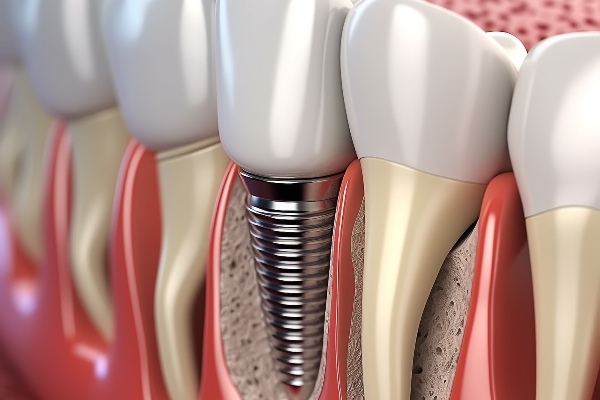
 Our implant dentist is here to guide you through the process of getting dental implants, from your initial consultation to the surgical installation of your implant. Understanding how the process works allows you to ask the right questions during your appointment.
An implant dentist spends a large fraction of their time placing implants. Implants are screws/rods that are placed in the jawbone to replace the roots of missing teeth. They do not directly replace missing teeth but serve as a base for dental restorations that do. An implant can be used to replace a single tooth, or restorations like dentures and bridges might be attached to them to replace missing teeth.
Our implant dentist explains the dental implant process
Thinking about replacing missing teeth with implants? Here are the different steps involved:
1. The consultation
As is the case with many dental treatments, getting implants starts with a consultation with a dentist. The patient's teeth and gums will be evaluated during the appointment, and diagnostic scans like X-rays might be administered to examine the patient’s jaw. The dentist will also examine any existing issues the patient has and recommend appropriate treatments.
One of the main things a dentist tries to determine during the evaluation is if the patient’s jaw is thick enough to hold implants. A patient’s jawbone not being thick enough for implants does not disqualify them from getting the treatment, but they will need to get bone grafts to thicken their jaw. Patients who need bone grafts will need to be fully recovered from the procedure before continuing with implants.
The dentist will also go over the patient’s medical history to determine if they have any existing issues that might negatively impact their ability to recover from surgery, like diabetes or immune system disorders. Anyone with health issues that might impact recovery is evaluated individually to assess if implants are right for them.
The final part of the consultation involves discussing the patient’s wishes for the missing teeth, like how they want them to look. The dentist weighs the patient’s desires and makes recommendations based on all the information they have. For example, a patient with a single missing tooth might only need one implant and a crown, while those with multiple missing teeth might need to combine their implants with bridges or dentures.
2. First procedure
Once a patient is cleared, a date is set for the placement of their implant. Local anesthetics are administered at the start of the treatment to numb the area being treated. The patient stays awake during the procedure while the dentist places the implant by making an incision, drilling a hole in the jaw, and placing the implant in the hole. The procedure takes anywhere from one to three hours.
3. Second procedure
The patient comes in for a second procedure once the implant has fused with the jawbone. Another incision is made and an abutment is placed on the implant, just above the gumline. It serves as a base for the restoration that will be used. An impression is also taken during this appointment to make the patient’s custom restoration.
4. Third procedure
Patients are given a couple of weeks for their gums to heal before coming back to get their custom restoration attached to the implant. This completes the process of getting implants.
Permanent teeth replacement in six months
Implants provide a permanent solution for missing teeth. Call or stop by our clinic to set up an appointment with our dentist to learn more.
Request an appointment or call Naples Dental and Wellness Center at 239-963-2325 for an appointment in our Naples office.
Related Posts
Getting dental implants is an important step toward restoring a healthy smile, and following the right aftercare is essential for a smooth recovery. An implant dentist provides clear instructions to help ensure proper healing and long-term success. Knowing what to expect and how to care for the implant site can help prevent complications.Mild discomfort is…
An implant dentist provides a reliable and long-lasting solution for missing teeth through dental implants. This process involves multiple steps to ensure the implant integrates successfully with the jawbone, providing a stable foundation for a natural-looking restoration. Understanding each stage of the dental implant process helps patients feel confident in their treatment plan and long-term…
An implant dentist replaces missing teeth with durable, natural-looking dental implants. Choosing the right provider is essential for long-term success, as implants require precise placement and proper integration with the jawbone. Patients seeking a permanent solution for tooth loss can benefit greatly from the expertise of an implant dentist. Understanding the advantages of specialized treatment…